



Protecting Sacred Spaces: TuffWrap and the Southeast Pennsylvania Church Re-Roofing Project
Background: An Irreplaceable and Newly Renovated Interior at Risk
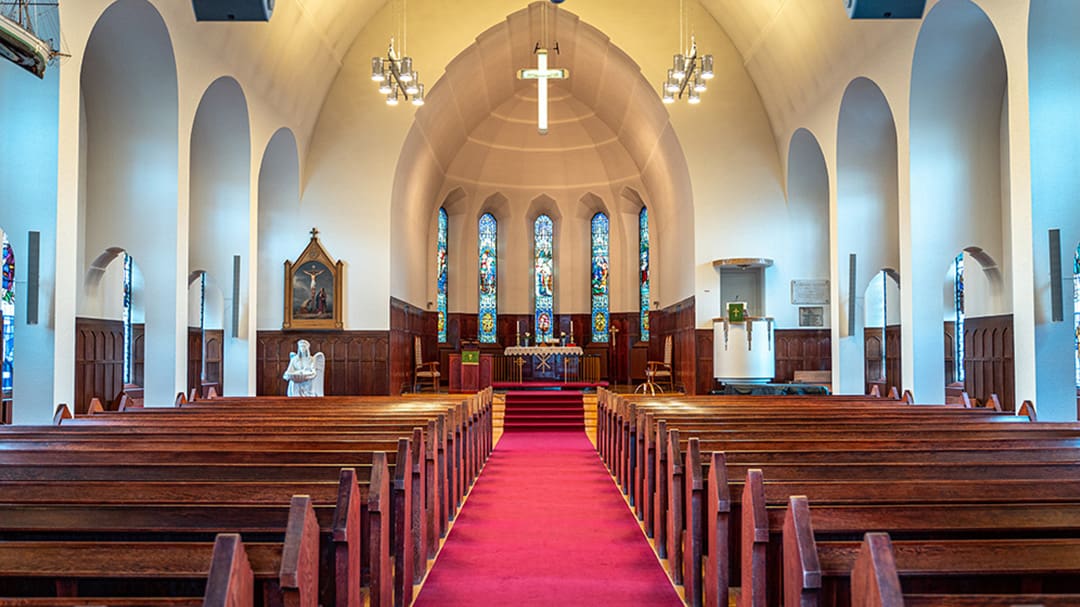
A historic church in southeast Pennsylvania had recently completed an extensive and costly interior renovation. Ornate finishes, restored woodwork, refurbished pews, and updated fixtures represented years of congregational planning and a significant financial investment. But the roof above it all had reached the end of its serviceable life and needed to be replaced without delay.
The challenge was immediately apparent to everyone involved: the church could not wait. But proceeding without protection meant gambling with everything the congregation had just restored.
The Problem: Years of Carbon, Nowhere to Go
Decades of candle use, combustion heating, and environmental exposure had deposited dense layers of fine carbon particles across the existing roof structure. This is not unusual in older religious buildings — but the sheer accumulation made the project uniquely hazardous. When roofing crews begin tearing off an old roof, the vibration and removal process dislodges everything that has settled in and around the roof deck. Joints open, gaps widen, and material falls.
In this case, that material would be a near-continuous fall of fine black particulate and it would drop directly onto a freshly renovated interior.
Without a dedicated protection system in place, the outcome was predictable and grim: the renovation would have been ruined. Surfaces coated in carbon dust. Fabrics and finishes contaminated. The work of years undone in a matter of weeks.
Four Competing Pressures, One Project
The roofing contractor faced a situation with no easy tradeoffs:
1. Protecting the finished interior. Every surface below the roof line woodwork, stone, textiles, decorative elements was newly restored and extremely vulnerable to particulate contamination.
2. Keeping the church operational. A full schedule of weddings, baptisms, and weekly masses was already on the books. Cancellations were not an option. The congregation needed to continue using the space throughout construction.
3. Managing an unusually heavy debris load. The volume of carbon and dust was far beyond what a standard re-roofing project produces. Even small gaps in protection would result in visible, damaging contamination.
4. Meeting strict fire code requirements. Any protective system installed inside a public assembly space had to comply with the fire marshal’s fire-retardant standards — a non-negotiable legal requirement.
The Solution: TuffWrap Suspended Cover, Installed First
The contractor made the right call early: bring in TuffWrap before a single shingle is removed.
TuffWrap’s team installed their Suspended Cover system across the full interior ceiling footprint of the sanctuary a purpose-engineered solution designed specifically for scenarios where active construction above must not compromise the finished space below. The installation addressed every joint, every seam, every area where debris could penetrate. It was thorough, methodical, and completed before demolition began.
The Suspended Cover acts as a full-coverage barrier: it collects falling debris rather than allowing it to pass through, channels particulate safely away from finished surfaces, and does so while meeting fire-retardant requirements in accordance with international building codes.
What the roofing consultant witnessed once the tear-off began made the necessity of that decision unmistakably clear:
To say TuffWrap saved the church’s interior from being destroyed is an understatement. So much fine dust, dirt, and carbon particles were falling through the joints of the roof deck during the tear-off it sounded like rain was falling onto the top surface of the plastic sheeting.”
The sound of debris raining down on the sheeting, continuous, heavy, and relentless, illustrated just how catastrophic an unprotected tear-off would have been. Instead of coating the interior, every particle landed on TuffWrap’s system and stayed there.
The Results: Work Proceeded. Nothing Was Lost.
The performance of the Suspended Cover exceeded even the contractor’s expectations. The installation proved so thorough and effective that the church hosted a full wedding photography session while re-roofing was actively underway directly above. The photographer and wedding party worked in a space that was, by any measure, completely dust-free.
Key outcomes from the project:
- Zero contamination. The newly renovated interior remained completely dust-free throughout the entire re-roofing project.
- Uninterrupted church operations. Scheduled weddings, baptisms, and weekly masses all proceeded as planned without disruption or compromise to the space.
- Full code compliance. The system met fire-retardant requirements and international building code standards, satisfying the fire marshal’s strict protocols on-site.
- Workplace safety maintained. TuffWrap’s installation supported a safe working environment for roofing crews above and building occupants below.
- A lasting professional relationship. The roofing consultant’s experience on the project converted him into a long-term advocate:
The expertise and cooperation TuffWrap showed during the project made me a lifelong advocate of their work. Their product and service measures include workplace safety, international code compliance, and fire-retardant properties, all in accordance with the fire marshal’s strict codes.”
Confidence That Carries Forward
The church project’s success spoke for itself, and its effects extended beyond the congregation. The same roofing contractor specified TuffWrap ceiling protection for an upcoming school re-roofing project in suburban Philadelphia. When a contractor has seen a system perform under genuinely difficult, high-stakes conditions, the decision to specify it again is straightforward.
About TuffWrap Suspended Cover
TuffWrap’s SmartSeam Suspended Cover system is purpose-built for interior protection during re-roofing, construction, and renovation projects where active work above must not compromise finished spaces below. The system is fire-retardant, internationally code-compliant, and engineered to handle real-world debris loads from fine carbon particulate to heavy construction waste. For contractors working on occupied or recently renovated buildings, it removes the risk entirely.