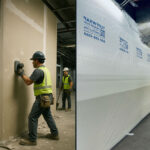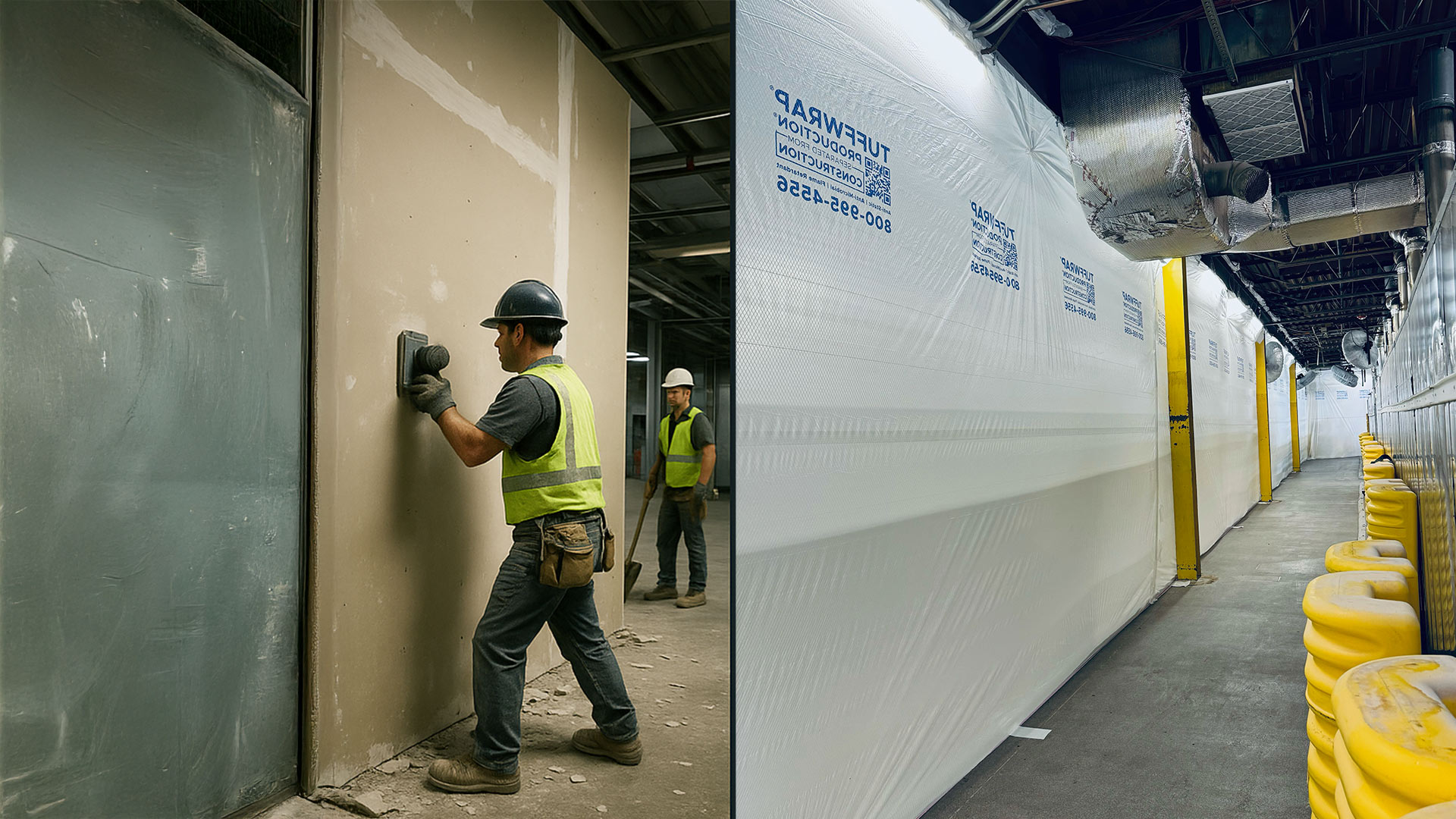
For decades, drywall has been the default choice for creating temporary construction barriers. It’s cheap, readily available, and familiar. However, in today’s demanding commercial and industrial environments, where operational continuity, cleanliness, and compliance are paramount, the traditional drywall barrier is proving to be inefficient, costly, and risky.
Frameless temporary walls, like those provided by TuffWrap, offer a modern, engineered solution as a superior alternative. This guide provides a direct comparison to help contractors and project managers make the most informed decision for their next project.
The Direct Comparison: Drywall vs. Temporary Plastic Walls
The differences between these two containment methods impact every phase of a project, from initial setup to final cleanup.
| Feature | Drywall Barrier | Temporary Plastic Wall System |
| Installation Speed | Slow. Requires framing, hanging, taping, mudding, and painting. | Fast. Engineered for quick assembly; often installed in hours by specialized crews. |
| Cleanliness | Extremely Messy. Generates significant dust from cutting and sanding. | Clean. Minimal dust generation during installation and removal. |
| Aesthetics | Unfinished and often patched | Professional. Clean, smooth, and aesthetically pleasing finish that maintains facility image. |
| Compliance | Requires fire-rated materials and can compromise sprinkler systems if not correctly installed. | Code-Compliant. Solutions like SmartSeam are 100% IBC-compliant and FM Approved. |
| Flexibility | Low. Difficult and time-consuming to move or reconfigure. | High. Easily reconfigured, expanded, or relocated as project phases change. |
Why Drywall is No Longer the Best Choice for Commercial Containment
While drywall serves its purpose in permanent construction, its drawbacks as a temporary barrier are significant, especially in sensitive environments:
-
The Dust Problem
The process of installing and removing a framed wall creates a massive amount of fine dust. This dust is a major contamination risk in food processing, pharmaceutical, and data center facilities. It also requires extensive post-construction cleaning, adding significant time and cost.
-
The Time and Labor Sink
Drywall requires multiple trades to coordinate, along with days or weeks to install and remove. In a fast-paced commercial project, this downtime is expensive. Temporary plastic systems, installed by TuffWrap’s in-house crews, can be erected and dismantled in a fraction of the time, keeping the project on schedule.
The TuffWrap Advantage: Engineered for the Modern Job Site
TuffWrap’s temporary wall systems are engineered to overcome the limitations of drywall, offering a faster, cleaner, and more compliant solution.
- Speed and Efficiency: Our systems are designed for rapid deployment, allowing you to move quickly from one phase to the next.
- Unmatched Compliance: Solutions like our SmartSeam Suspended Cover are the only ones on the market to achieve 100% IBC code compliance, a level of safety and assurance that drywall barriers cannot guarantee.
- Professional Image: The clean, finished look of our walls helps minimize disruption to the customer experience during your construction project.
In conclusion, contractors and project managers focused on efficiency, compliance, and cost control; the choice is clear. A temporary wall that decreases the containment risk is the new standard for construction containment.
Ready to upgrade your containment strategy? Contact TuffWrap to discuss a temporary wall solution for your next project.