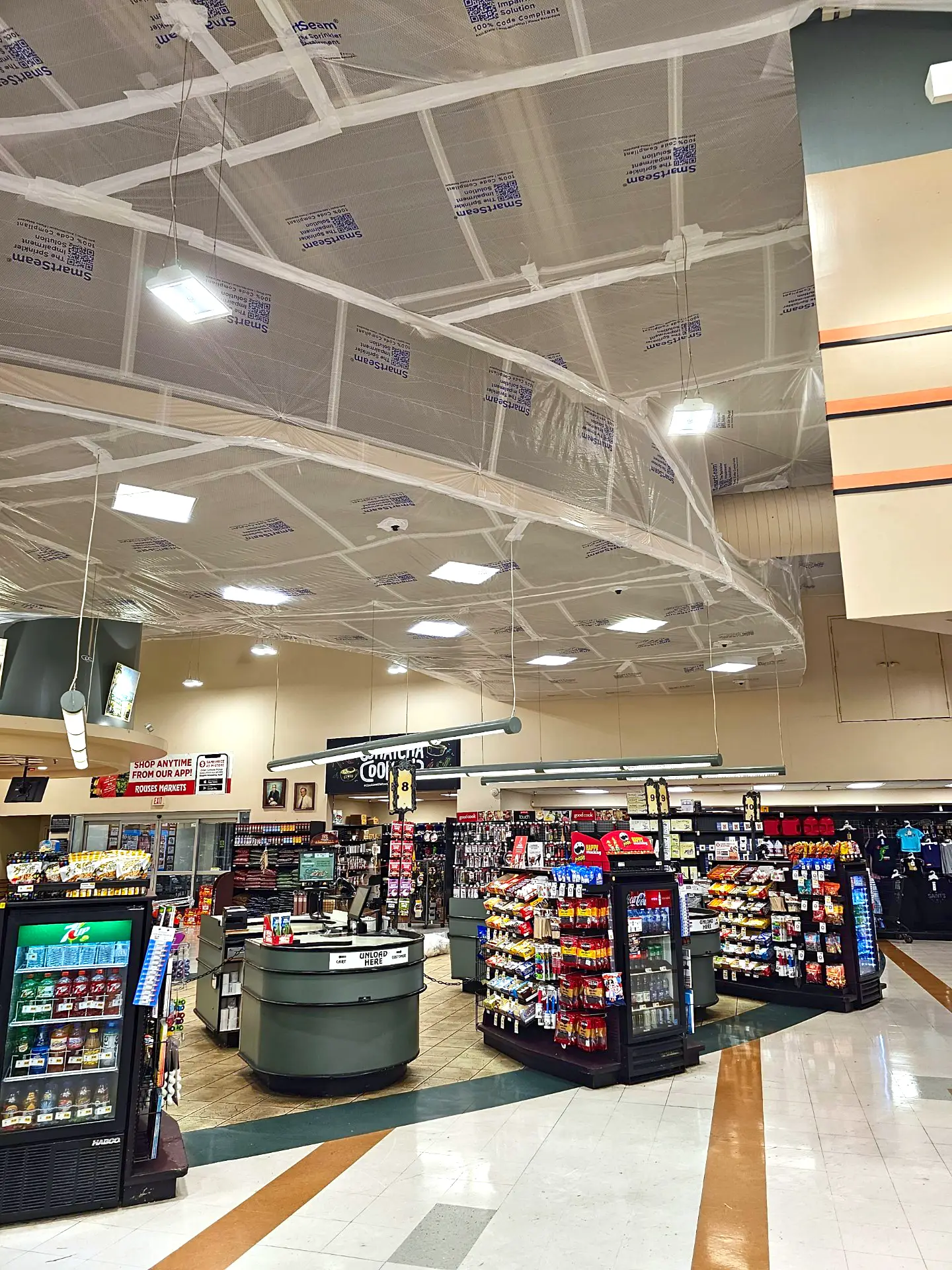
Temporary Ceiling Barriers

A Suspended Cover For Your Facility

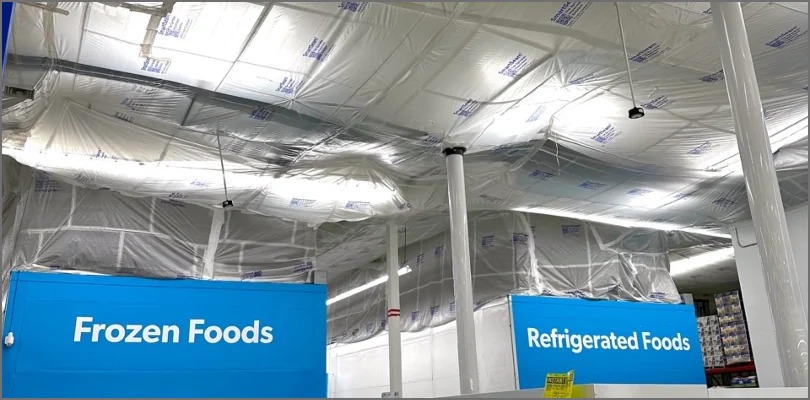
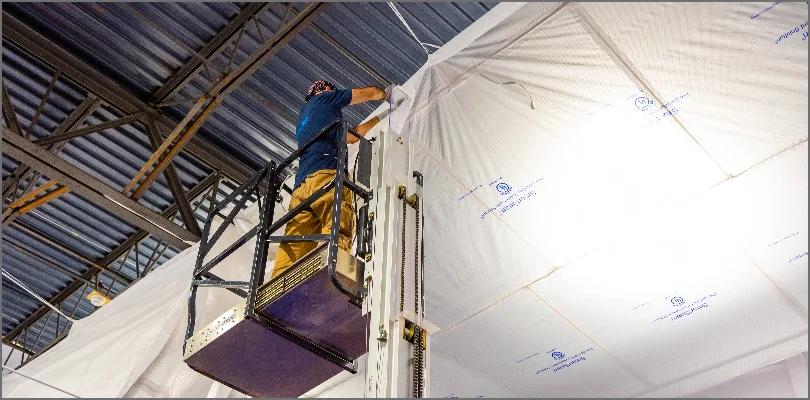
A Temporary Ceiling™ is used as part of a broader reroofing containment or overhead construction containment strategy, separating active operations on the ground from construction activity above. Pioneered by TuffWrap Installations.
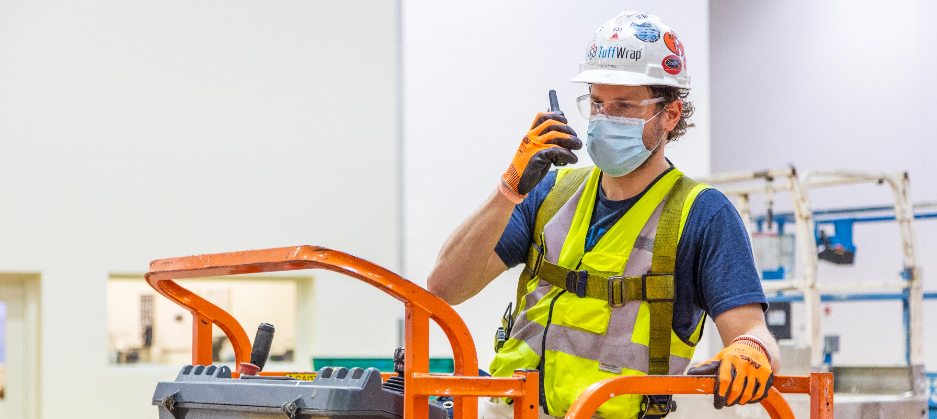
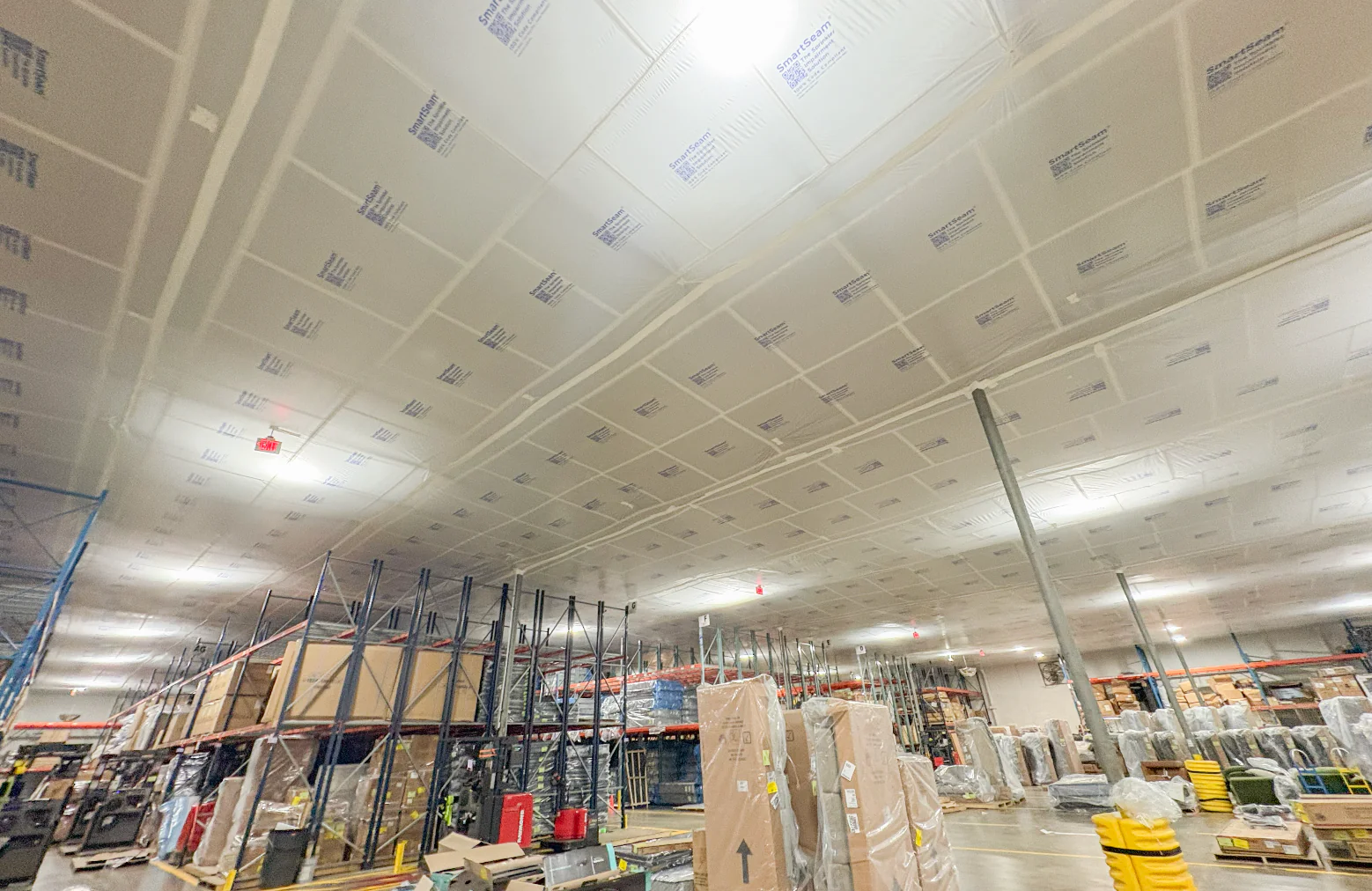
Fire Code Compliance without Compromise

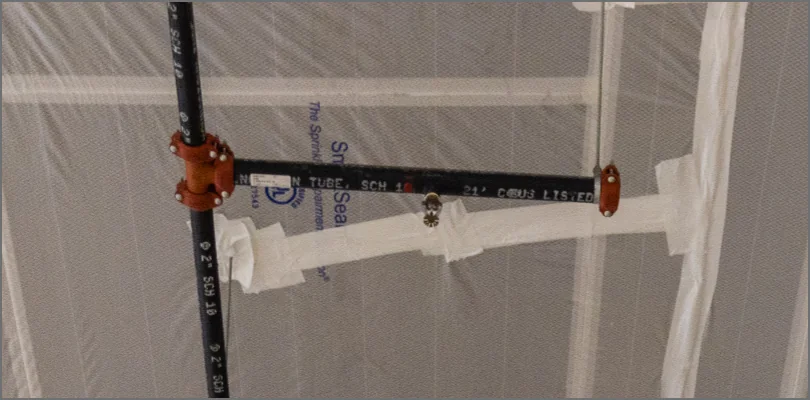
Our Temporary Ceilings are made with SmartSeam™, which is fully compliant with IAMPO EC 043 and FM Approved, Class ASTM E84 A fire ratings, 4652 NFPA 13 compliance, and UL 723S certification. Designed to fall away in the event of a fire, SmartSeam allows fire sprinklers to remain functional. Keeping your operations safe from both contamination and fire risk.

SmartSeam® Suspended Cover System

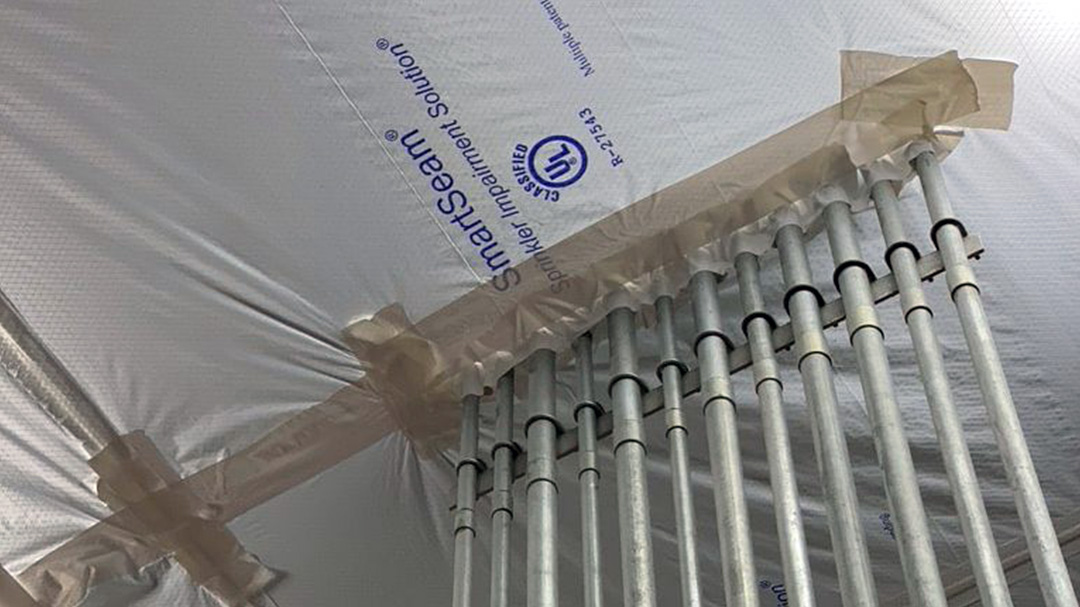
Our flagship product is a patented suspended cover system that creates a temporary ceiling-level barrier for roofing and other overhead construction. SmartSeam® protects people, products, and equipment from dust, debris, and exposure while work continues above.
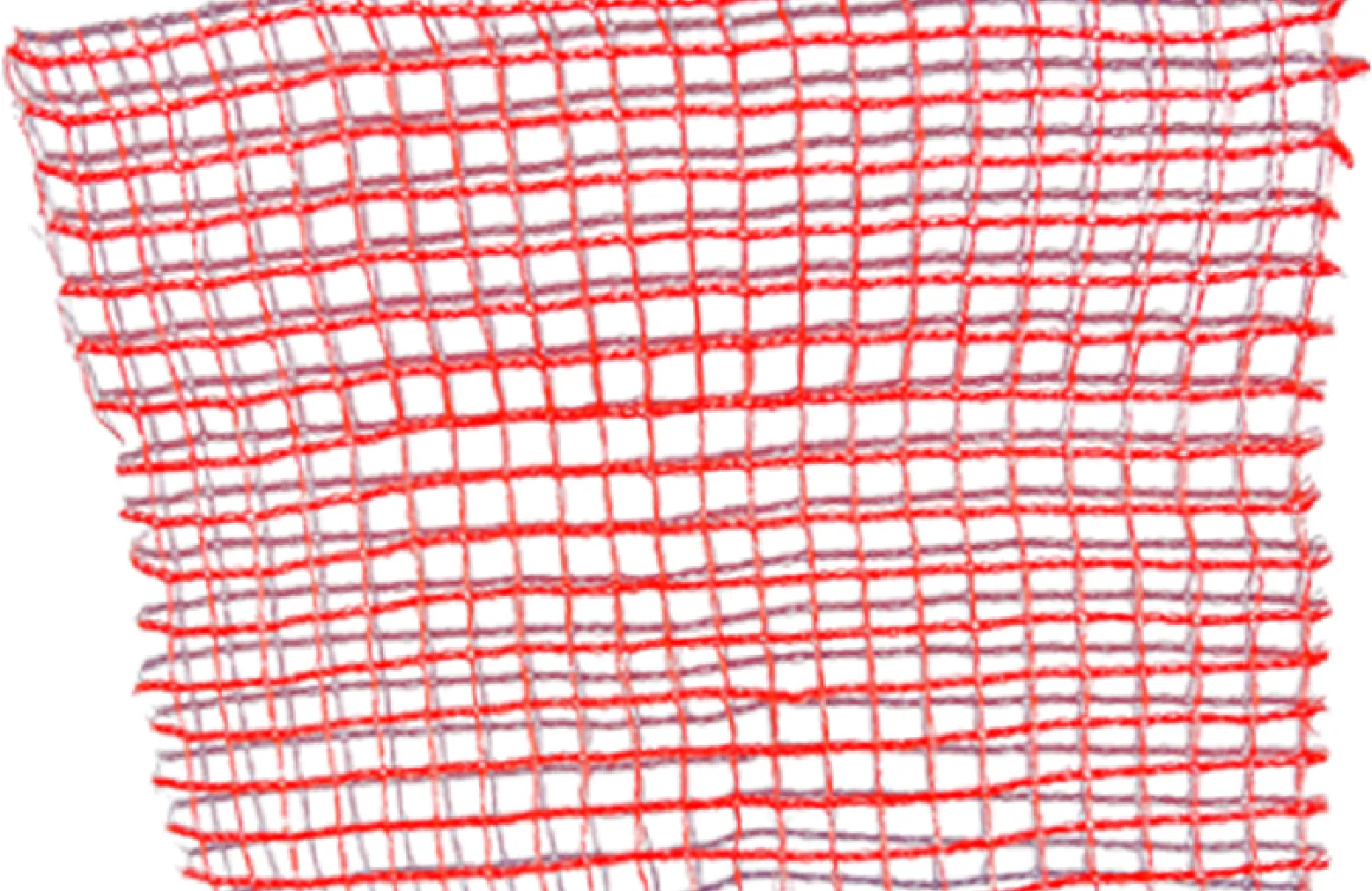
TUFFNET™ Debris Netting

A protective netting system that can be installed to capture larger debris before it can damage the dust ceiling below.

When Is a Temporary Ceiling Used?

Reroofing projects

Roof replacement and repair

Overhead construction

Ceiling renovation work

Structural modifications above occupied spaces

Facility maintenance projects

Manufacturing and production environments

Warehouses and distribution centers

Food processing facilities

Projects involving sensitive equipment, inventory, or products

Three Things a Temporary Ceiling Must Accomplish:

1. Contain Dust and Debris

Create a continuous barrier between construction activity and the facility below. Proper containment prevents dust, debris, and loose materials from reaching employees, products, equipment, and inventory.

2. Allow for Sprinkler Activation

Never compromise safety systems. A suspended cover installed within an occupied facility must be designed with fire protection requirements in mind so sprinkler systems can perform as intended in an emergency.

3. Be Fully Code Compliant

Because a suspended cover serves as a temporary ceiling, it must be evaluated through the lens of fire safety, building codes, flame spread requirements, and sprinkler considerations. Compliance is a critical component of any temporary containment strategy.

SMARTSEAM® IN ACTION

Trusted nationwide to protect people, products, and property during construction.

Getting Terminal Operational Days after Severe Storm Damage
Emergency Roof Repair

Getting Terminal Operational Days after Severe Storm Damage

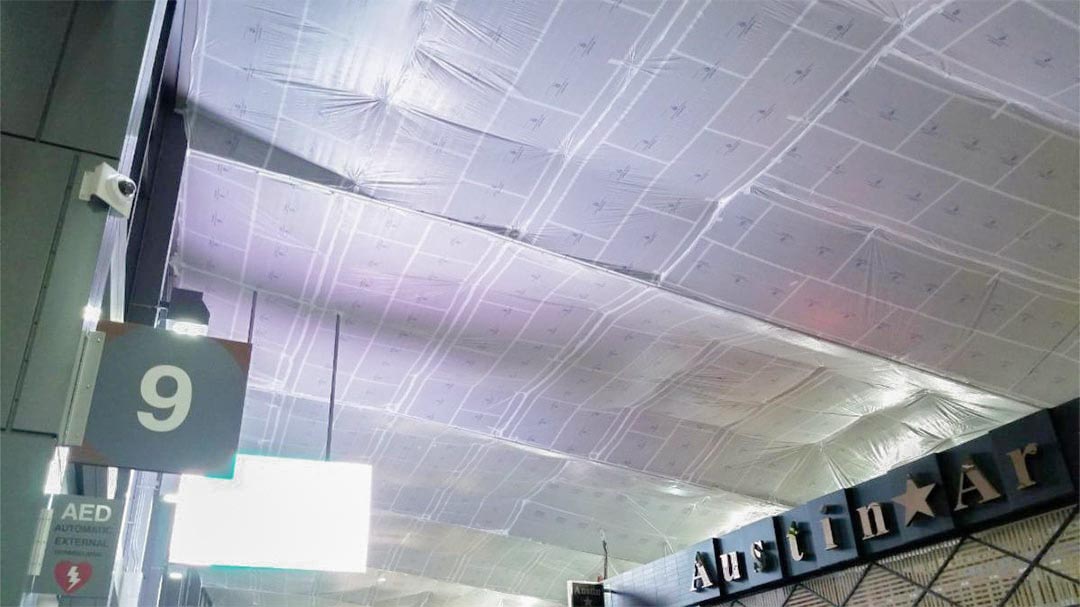
A severe storm damaged the terminal roof at an airport, necessitating a full replacement. SmartSeam® & Tuffwrap's crew made the terminal operational within days.

See project
Keeping Food Production Going
Food & Beverage

Keeping Food Production Going

The roof of the 128,000 square foot facility required replacement, but closing was not an option. SmartSeam® was effectively installed around protrusions and protected the lines below.

See project
Rouses Market Stays Open During Construction
Retail & Commercial Spaces

Rouses Market Stays Open During Construction

SmartSeam® allowed the the store to stay operational, the food safe, and customers shopping across 47,675 square feet of active roof repair.

See project

Common Questions about Temporary Ceilings and Suspended Cover

Ready to Reroof Without Downtime?

Let TuffWrap’s Temporary Ceiling solution, SmartSeam, protect your people, products, property, and operations even during reroofing and overhead construction.