Fire sprinklers are one of the most important parts of any building’s fire protection strategy. They are designed to react to heat and suppress a fire by releasing pressurized water over the affected area. Their ability to control or extinguish fires quickly is one of the reasons they are required in so many commercial, industrial, and occupied spaces. When they are present and functioning properly, sprinkler systems significantly reduce fire damage, liability, and risk to occupants.
A common misconception is that every sprinkler head activates at the same time during a fire. In reality, sprinkler systems are typically designed so that individual heads activate only where heat reaches the required threshold. That means sprinkler performance depends on proper conditions at each sprinkler head. If something interferes with heat reaching the head, the system’s response can be delayed.
 How Fire Sprinklers Activate
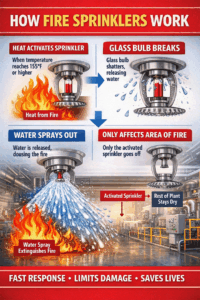
A fire sprinkler system consists of a network of pressurized water pipes with sprinkler heads installed at set intervals. Each head contains either a small glass bulb filled with a glycerin-based liquid or a fusible link. As heat builds in the air around the sprinkler, that internal element responds. Once the activation temperature is reached, traditionally between 135 and 165 degrees Fahrenheit, the device releases and water begins to flow.
This design is simple, but highly effective. Sprinklers are intended to activate only where the fire is generating enough heat, helping suppress flames until the fire department arrives. That is why clear, unobstructed conditions around sprinkler heads matter so much.
Why Temporary Containment Can Create Fire Safety Risks
During construction, reroofing, and renovation projects, temporary dust containment is often installed to separate work areas and help control dust and debris. That protection is important, but not every containment material or installation method supports fire safety equally. Some temporary plastics or non-code-compliant containment systems can interfere with sprinkler performance.
When materials are installed below or around sprinklers, they can act as a barrier between heat and the sprinkler head. Even if the heat eventually reaches the sprinkler, the delay can affect activation timing and interfere with the system’s intended response. In a fire, that delay is a serious life safety issue.
This is where many temporary containment solutions fall short. Some products are marketed as though they will not impair sprinkler activation, but those claims should only be trusted when they are backed by recognized testing or code requirements. Any dust containment product installed in a sprinklered space should be evaluated carefully, because even a partial obstruction can reduce system effectiveness.
Why Code Compliance Matters
Code compliance is not just a technical detail. It is a set of safety requirements developed to protect people, property, and operations. When it comes to temporary containment, fire safety should never be treated like an afterthought or a marketing claim. A system is either compliant with applicable code requirements or it is not.
That distinction matters because building owners, contractors, and facility managers are relying on fire suppression systems to perform as designed in an emergency. If temporary containment changes the conditions around sprinkler heads, it can introduce unnecessary risk into an already active jobsite.
How TuffWrap SmartSeam Helps Reduce the Risk
Advanced containment systems are designed to protect the workspace without compromising fire protection. TuffWrap’s SmartSeam was developed with that balance in mind. Instead of interfering with heat flow or water distribution, SmartSeam is designed to fall away in the presence of a fire, allowing the sprinkler system to operate as intended.
Because of its engineered heat seam, SmartSeam helps maintain the conditions needed for sprinkler activation while still delivering the durability and containment performance required on an active jobsite. That means facilities can continue operating during construction while still supporting the building’s installed fire suppression system.
At TuffWrap, fire safety and risk mitigation are taken seriously. That is why products undergo quality control, testing, and code compliance verification to support the highest safety standards.
Containment Should Never Come at the Expense of Fire Safety
Fire sprinklers are a proven and effective life safety system, but their performance depends on proper installation conditions. During construction or reroofing, temporary containment must be selected and installed with those conditions in mind. Protecting a workspace from dust and debris is important, but it should never come at the cost of delaying sprinkler activation or compromising emergency response.
With the right containment approach, it is possible to maintain safety, productivity, and compliance at the same time. That is the standard that building owners and contractors should expect from any temporary containment solution.
Contact TuffWrap
Need a temporary containment solution that supports both jobsite protection and fire safety? Contact TuffWrap to learn more about SmartSeam installations and code-compliant containment systems.