



Dust Control Pitfalls and How to Troubleshoot With Proper Containment
In an occupied facility, dust and debris affect employees, customers, equipment, inventory, production, and the schedule itself.
Dust control often looks successful at first. Barriers go up and everything seems contained, until workers move through the area, HVAC systems cycle, or overhead work sends debris beyond the work zone.
Dust problems rarely start with one major failure. They come from small gaps in planning, materials, installation, and containment design. Effective construction dust control takes more than a temporary barrier. It takes a strategy built around how the facility actually operates. See how TuffWrap Solutions are leading in proper containment for dust control.
Why Dust Control Is Difficult in Active Facilities
On an empty site, dust can spread without affecting people, products, or operations. In an occupied facility, workers, equipment, customers, and materials move through the area all day. HVAC systems shift air between spaces, doors open and close constantly, and roofing, demolition, and ceiling work drop debris from above.
Add tight schedules and operations that can’t stop, and dust containment becomes far more demanding than basic temporary separation.
Common Reasons Dust Control Fails
Improvised barriers aren’t built for the job. Loose tarps, basic poly sheeting, and makeshift partitions may look adequate, but construction is hard on them. Barriers get cut, pulled, repositioned, or left with gaps, and every change creates a new path for dust. Improvised barriers have their place, but sensitive operations and large work areas need a more deliberate approach.
Small gaps become big problems. Containment is only as strong as its weakest opening. Watch for:
- Open edges and corners
- Gaps at the floor or ceiling
- Unsealed punctures
- Poorly connected barrier sections
- Temporary access points
- Doors that don’t seal
A barrier can look fully enclosed while still letting particles escape. Proper containment accounts for the entire boundary, not just the visible wall.
Airflow is overlooked. HVAC systems, pressure differences, open doors, and fans can carry particles well beyond the work zone. This matters most in manufacturing, healthcare, food and beverage, warehouse, and retail settings. Containment systems need to account for how air moves through the whole facility.
Overhead work adds complexity. Reroofing and ceiling work can send insulation, roofing materials, and debris through the roof deck or ceiling assembly. A wall can’t stop what comes from above, which is why temporary ceiling containment and suspended protection are essential for reroofing, renovation, and overhead construction.
Containment isn’t coordinated with the project. Sometimes the issue is when and how the barrier is installed. If containment isn’t part of estimating and planning, contractors may discover too late that workers need access, equipment must pass through, or the barrier doesn’t fit the facility layout. Coordinate containment with sequencing, trades, material movement, HVAC, facility operations, access and egress, overhead work, and cleanup.
The Hidden Costs of Poor Dust Control
When dust escapes, the consequences go well beyond cleanup:
- Extra cleanup: Dust reaches areas outside the construction plan.
- Operational disruption: Production, retail, warehouse, or office activity may be delayed or interrupted.
- Equipment and inventory exposure: Dust settles on machinery, products, and packaging.
- Complaints: Visible dust, debris, and odors frustrate employees and customers.
- Schedule delays: Re-cleaning, containment changes, and interruptions slow the project.
- Quality and safety concerns: Facilities with strict cleanliness or environmental requirements face added risk.
For hospitals, food facilities, plants, schools, and retail spaces, poor containment can cost far more than the right system would have.
What Proper Containment Looks Like
Effective containment is more than stronger plastic. It’s a system designed around the work and the facility. It may include:
- Durable temporary walls
- Properly sealed work areas
- Controlled access points
- Suspended overhead protection
- Custom-engineered installation
- Materials suited to the environment
- Coordination with facility operations, airflow, and HVAC
- Protection from both dust and debris
The goal isn’t zero dust. It’s controlling where dust and debris go so work can continue with minimal disruption.
Why Suspended Containment Matters
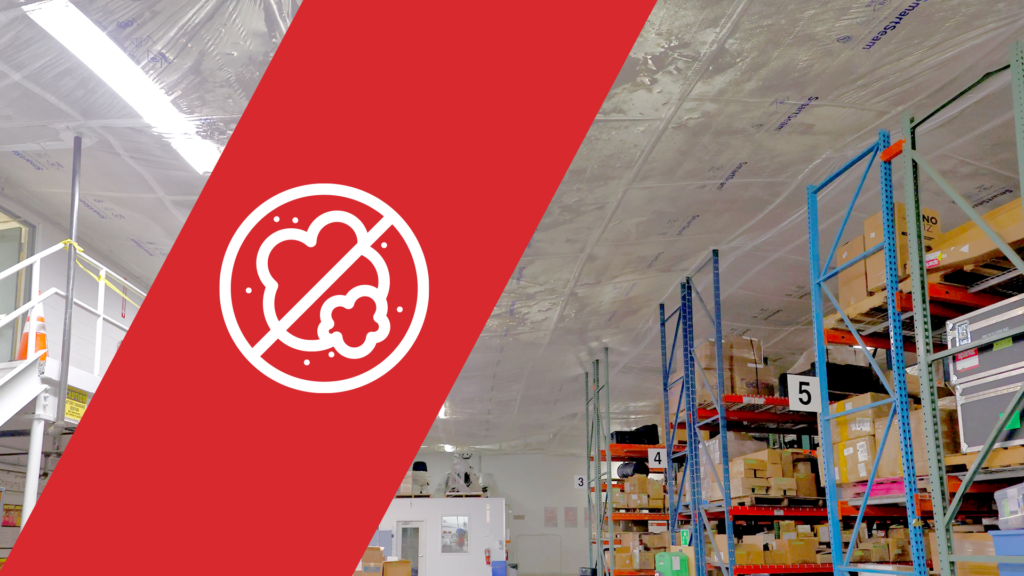
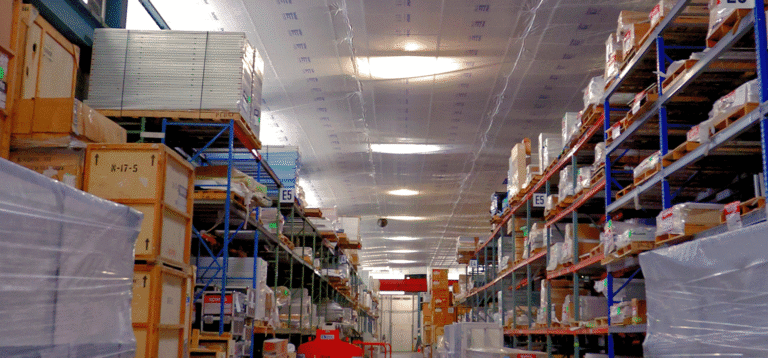
For reroofing, ceiling work, and other overhead construction, containment must address what happens above the occupied space. TuffWrap’s suspended solutions, including SmartSeam and TuffNet, provide overhead protection beneath active work areas. They:
- Contain overhead dust and debris
- Protect occupied areas below
- Reduce migration beyond the work zone
- Maintain a consistent containment boundary
- Support construction in operational facilities
This is especially valuable for dust control during reroofing, where vertical barriers can’t stop material falling from above.
Occupied Facilities Require a Different Approach
The biggest difference between an occupied facility and an empty site is simple: the building still has to work. Employees need to do their jobs, production needs to run, customers need access, and inventory needs protection. Containment has to work with the facility, not just separate it from construction.
TuffWrap specializes in engineered containment for active environments, addressing dust, debris, access, and operational continuity in one coordinated approach. Containment isn’t just about keeping a construction area clean. It’s about protecting the operation around it, and being able to access it without compromising protection.
How Contractors Can Improve Dust Control Planning
Before mobilization:
- Plan early. Decide what needs to be isolated before dust becomes a problem.
- Evaluate airflow. Understand HVAC circulation, pressure differences, and other pathways for airborne particles.
- Coordinate sequencing. Make sure containment works with demolition, material handling, equipment movement, and other trades.
- Choose the right barrier. Depending on the application, you may need a vertical wall, a suspended cover, or a total enclosure.
- Plan access points. Purpose-built access keeps the boundary intact without forcing workers to cut through barriers.
- Look beyond the construction zone. Identify sensitive equipment, inventory, production areas, and occupied spaces.
- Bring in a specialist. Complex facilities often need more than standard barriers. An experienced partner like TuffWrap can spot vulnerabilities before they become problems.
Better Dust Control Starts With Better Containment
Dust control failures are usually preventable. The material is rarely the culprit. More often, the cause is incomplete planning, gaps in the boundary, uncontrolled access, airflow, or a solution not designed for an active facility.
TuffWrap designs and installs temporary containment for active facilities, including suspended covers, Frameless Walls, Hybrid Walls, Total Enclosures, and construction access systems.
Don’t make dust control an afterthought. Plan containment into the project from the start.
Ready to improve dust and debris control? Talk with TuffWrap’s experts about an engineered containment solution for your next project.
Ph: (800) 995-4556 | tuffwrap.com